When an optical system operates above 300°C, ordinary glass or polymer-based substrates can lose dimensional stability, distort the optical path, and introduce unacceptable wavefront error. This problem is often underestimated because the component may appear mechanically intact while its refractive behavior, coating adhesion, or alignment has already changed. In laser processing, spectroscopy, infrared imaging, semiconductor inspection, and aerospace sensing, even a small thermal shift can reduce measurement accuracy, interrupt calibration, and create costly system downtime. Understanding Why Quartz Glass Substrates Are Used in High-Temperature Optical Systems is therefore not simply a materials-selection exercise; it is a reliability and business-continuity decision.
At CQT, we evaluate a Quartz Glass Substrate according to the complete optical assembly: operating temperature, wavelength, thermal cycling, mounting stress, surface finish, coating process, and required dimensional tolerance. This systems-based approach helps customers select fused silica substrates that remain stable when thermal conditions change rapidly.
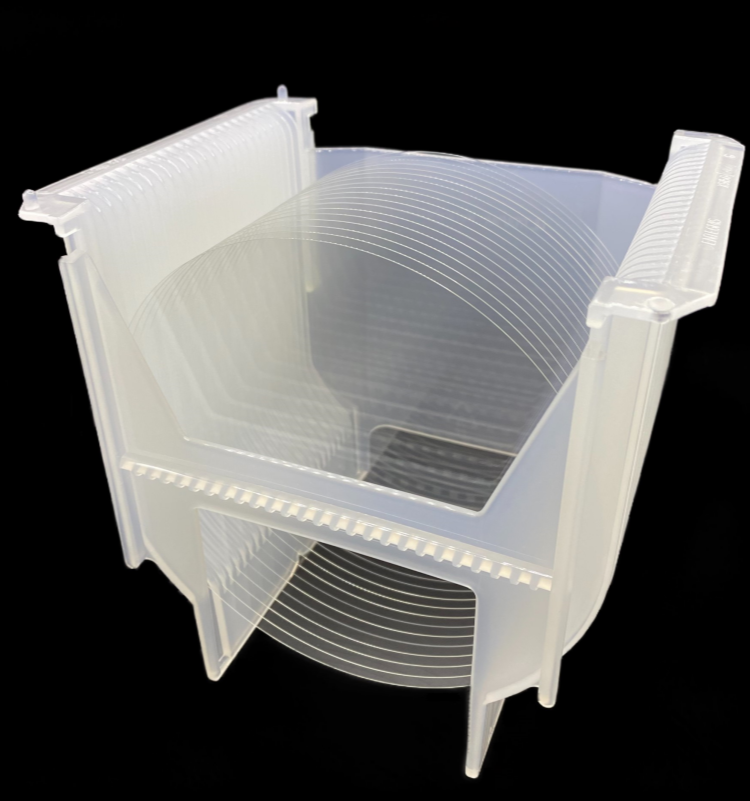
Fused silica, commonly used for high-performance quartz optical substrates, has an exceptionally low coefficient of thermal expansion, typically around 0.5–0.6 × 10⁻⁶/K near room temperature. By comparison, many conventional optical glasses and metals expand several times more under the same temperature change.
This low expansion reduces:
For example, a 100 mm substrate exposed to a 200°C temperature increase would experience a dimensional change of approximately 0.01 mm if the effective expansion coefficient were 0.5 × 10⁻⁶/K. That change may sound small, but in interferometry, laser beam delivery, and precision imaging, it can exceed the allowable error budget.
Quartz glass offers useful transmission from the ultraviolet through the visible and near-infrared regions, depending on grade, purity, thickness, and surface treatment. This makes it suitable for:
Low absorption is especially important in high-power optical systems. If a substrate absorbs too much energy, localized heating can create a thermal lens. The resulting refractive-index gradient changes beam quality and can accelerate coating failure. Quartz glass helps reduce this risk when the correct optical grade and coating design are selected.
Quartz glass has a high softening point, generally close to 1,660–1,670°C, although the practical operating limit depends on load, atmosphere, geometry, surface condition, and thermal gradient. Its low expansion also improves thermal-shock resistance compared with many alternative glasses.
However, “high-temperature resistant” does not mean damage-proof. Rapid heating, uneven cooling, edge chips, scratches, contamination, and clamping stress can still initiate cracks. CQT therefore considers edge finishing, chamfer geometry, flatness, and mounting conditions—not only the nominal material temperature rating.
To understand Why Quartz Glass Substrates Are Used in High-Temperature Optical Systems, we first need to identify why other substrate materials become unreliable.
Every optical assembly has a thermal expansion budget. If the substrate, holder, spacer, and coating expand at different rates, the system develops mechanical stress. This can cause:
Quartz glass minimizes the substrate’s contribution to this error budget, particularly when the mounting design uses compliant supports or matched materials.
Thermal performance is not determined by expansion alone. The refractive index also changes with temperature through the thermo-optic coefficient. A substrate can remain dimensionally stable yet still produce a measurable optical-path shift if its temperature is nonuniform.
For precision systems, we recommend evaluating:
Scratches, digs, pits, edge chips, and subsurface damage can act as stress concentrators. At high temperature, repeated thermal cycling may enlarge these defects or reduce the component’s service life. A substrate that passes a basic visual inspection may still fail under thermal shock or high-energy laser exposure.
For this reason, CQT can define surface quality, flatness, parallelism, chamfer dimensions, and coating adhesion requirements before production. Where required, dimensional inspection can be controlled to a tolerance of 0.01 mm, subject to geometry and drawing specifications.
A reliable Quartz Glass Substrate begins with traceable raw material. Relevant checks may include:
For thermal-expansion characterization, laboratories may use methods aligned with ASTM E228 for linear thermal expansion testing. Optical drawings may reference ISO 10110 notation, while surface quality can be specified using recognized scratch-dig conventions such as MIL-C-13830, where appropriate to the customer’s procurement standard.
Depending on the application, a CQT inspection plan may include:
| Control item | Why it matters | Typical engineering approach |
|---|---|---|
| Thermal expansion | Controls focus drift and dimensional error | Material data and ASTM E228-aligned testing |
| Surface quality | Reduces scatter and crack initiation | ISO 10110 or approved scratch-dig specification |
| Flatness and wedge | Protects transmitted wavefront and alignment | Interferometric or precision gauge inspection |
| Coating adhesion | Prevents delamination during thermal cycling | Customer-approved adhesion and environmental tests |
| Final appearance | Detects contamination and handling damage | 100% visual inspection where specified |
Testing should reflect the actual use environment. A room-temperature transmission result alone cannot prove reliability in a furnace viewport, vacuum chamber, or high-power laser path.
The cost of a high-temperature optical substrate is only one part of the total ownership cost. A failed window or distorted optical element can affect the entire production process.
In semiconductor and display manufacturing, optical inspection systems depend on stable focus, repeatable illumination, and accurate image registration. Thermal drift can create false defects, lower throughput, and increase recalibration frequency. Replacing an optical window may also require chamber venting, cleaning, alignment, and qualification.
High-power laser systems are sensitive to absorption, thermal lensing, and coating damage. A properly specified Quartz Glass Substrate can help preserve beam quality and reduce unplanned maintenance, especially when combined with low-absorption coatings and appropriate heat sinking.
Optical sensors used in aircraft, satellites, and industrial monitoring may experience repeated temperature changes rather than one constant temperature. Low-expansion fused silica helps maintain dimensional and optical stability across these transitions, but the complete assembly still requires qualification for vibration, vacuum, contamination, and thermal cycling.
From a purchasing perspective, accurate drawings, consistent inspection records, and responsive engineering communication are as important as the material itself. CQT can organize specification review, production feedback, and a 24-hour response target for urgent technical inquiries, depending on project scope and time zone.
A simple comparison demonstrates the value of low-expansion material. Consider two 100 mm optical substrates exposed to a 200 K temperature increase:
| Substrate example | Illustrative expansion coefficient | Approximate length change |
|---|---|---|
| Fused silica | 0.55 × 10⁻⁶/K | 0.011 mm |
| Material with 8 × 10⁻⁶/K expansion | 8 × 10⁻⁶/K | 0.160 mm |
The difference is approximately 0.149 mm over the same temperature change. In a low-tolerance optical mount, that difference can create measurable tilt, focus displacement, or mechanical preload.
This is not a promise that quartz glass eliminates all thermal error. It shows why engineers use it to reduce one of the most predictable sources of error. Actual performance must be confirmed through the system’s thermal model and qualification test.
Ignoring material compatibility can create consequences that appear gradually and become expensive to correct:
These risks become more serious when business conditions change. A system originally designed for intermittent laboratory use may later run continuously in production. A moderate-temperature process may be upgraded to a higher-power laser. A supplier may also change the coating or mounting method without reassessing thermal compatibility.
Why Quartz Glass Substrates Are Used in High-Temperature Optical Systems comes down to thermal stability, optical transmission, thermal-shock resistance, and long-term dimensional control. Fused silica cannot compensate for poor mounting, unsuitable coatings, contamination, or excessive thermal gradients, but it provides a strong material foundation for demanding optical systems.
We recommend treating the Quartz Glass Substrate as a critical engineered component rather than a generic glass part. By defining thermal conditions, optical tolerances, inspection standards, and service-life requirements early, CQT helps reduce redesign risk and protect system performance. Contact CQT with your drawing and operating conditions to begin a technical review, confirm the right quartz grade, and establish an inspection plan suited to your application.


Copyright © Hangzhou Freqcontrol
Electronic Technology Ltd.
All Rights Reserved | Sitemap |
Powered by 







 中文


