Quartz glass substrates are widely used in high-temperature optical systems due to their exceptional thermal stability, optical transparency, and chemical resistance. In industries such as semiconductor manufacturing, laser technology, aerospace, and scientific instrumentation, optical components are often exposed to extreme temperatures and harsh environments where conventional glass materials cannot maintain stable performance.
Quartz glass provides a reliable solution for these demanding applications, making it one of the most important substrate materials in advanced optical engineering.
A quartz glass substrate is an optical-grade material made primarily from high-purity silicon dioxide (SiO₂). It is commonly referred to as fused quartz or fused silica depending on the manufacturing process and purity level.
Unlike ordinary glass, quartz glass has an amorphous structure with extremely low impurity content, which gives it superior thermal and optical properties.
Quartz substrates are manufactured into wafers, plates, windows, and custom optical components used in high-precision systems.
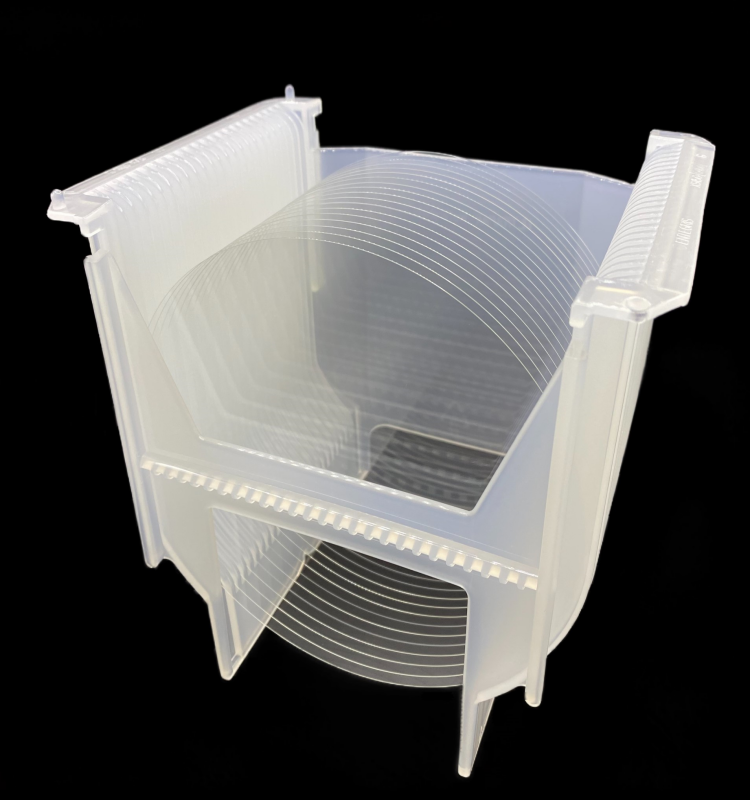
One of the primary reasons quartz glass substrates are used in high-temperature optical systems is their outstanding thermal resistance.
Quartz glass can withstand continuous operation at temperatures far beyond the limits of standard optical glass. It maintains structural integrity and optical performance even under prolonged thermal exposure.
Its softening point is significantly higher than conventional glass materials, allowing it to operate reliably in:
High-power laser systems
Semiconductor processing chambers
Industrial furnaces
UV curing equipment
Aerospace optical systems
This thermal stability is essential for maintaining consistent optical alignment and transmission performance.
Quartz glass has a very low coefficient of thermal expansion.
When exposed to temperature fluctuations, it experiences minimal dimensional change compared to ordinary glass materials. This characteristic is critical in precision optical systems where even microscopic deformation can affect beam alignment, focus accuracy, or imaging quality.
Low thermal expansion helps:
Maintain optical precision
Reduce thermal stress
Prevent cracking under rapid temperature changes
Improve system stability in thermal cycling environments
This makes quartz glass particularly suitable for high-accuracy optical assemblies.
Quartz glass substrates provide excellent transmission across a broad wavelength range.
They are highly transparent from ultraviolet (UV) through visible light and into infrared wavelengths. This wide spectral transmission capability makes quartz ideal for:
UV optics
Laser systems
Spectroscopy equipment
Semiconductor lithography
Optical sensing systems
Unlike many standard glass materials, quartz maintains stable transmission performance even at elevated temperatures.
High-temperature optical systems often experience rapid heating and cooling cycles.
Quartz glass has exceptional thermal shock resistance, meaning it can tolerate sudden temperature changes without cracking or structural failure.
This property is especially important in applications such as:
Pulsed laser systems
Semiconductor wafer processing
High-temperature inspection systems
Laboratory thermal testing equipment
Materials with poor thermal shock resistance may fail quickly under these operating conditions, while quartz maintains long-term reliability.
Quartz glass substrates also offer excellent chemical resistance.
They are resistant to most acids, gases, and corrosive environments commonly found in industrial processing systems. This chemical stability helps maintain optical clarity and prevents surface degradation over time.
In semiconductor manufacturing and chemical processing equipment, quartz components are often exposed to aggressive cleaning agents and reactive gases, making material stability essential.
High-purity quartz glass contains extremely low levels of metallic and ionic contaminants.
This is particularly important in semiconductor and photonics industries, where contamination can negatively affect process quality and device performance.
The purity of quartz glass supports:
Stable optical transmission
Reduced scattering and absorption
Improved laser performance
High process cleanliness
These characteristics are critical in precision optical systems operating at high temperatures.
Quartz glass substrates are used in a wide variety of advanced technologies.
In semiconductor manufacturing, they are used for wafer carriers, photomasks, and process windows exposed to high-temperature plasma environments.
In laser systems, quartz optics help manage high-energy beams while maintaining stable transmission and thermal resistance.
In aerospace and defense applications, quartz substrates are used in optical sensors and imaging systems that operate under extreme environmental conditions.
They are also widely used in laboratory instruments, UV curing systems, spectroscopy equipment, and industrial inspection devices.
Compared with standard optical glass materials, quartz glass offers:
Higher temperature resistance
Lower thermal expansion
Better UV transmission
Stronger thermal shock resistance
Greater chemical durability
Although quartz glass is generally more expensive and more difficult to machine, its performance advantages make it essential for demanding optical applications.
Quartz glass substrates are widely used in high-temperature optical systems because of their exceptional thermal stability, low thermal expansion, broad optical transmission, and strong chemical resistance.
These properties allow quartz glass to maintain reliable optical performance in extreme environments where conventional materials would fail. From semiconductor processing to high-power lasers and aerospace optics, quartz glass remains one of the most important materials for advanced high-temperature optical engineering.



Copyright © Hangzhou Freqcontrol
Electronic Technology Ltd.
All Rights Reserved | Sitemap |
Powered by 







 中文
中文


