Thermal Shock Resistance of Quartz Glass Substrates in Industrial Use describes a Quartz Glass Substrate’s ability to withstand rapid temperature changes without cracking, warping, delaminating, or losing dimensional accuracy. In practical applications, this property protects semiconductor wafers, optical components, RF devices, sensors, and laboratory equipment during heating and cooling cycles. For manufacturers, strong thermal shock resistance can reduce product failure, unplanned downtime, scrap rates, and maintenance costs.
CQT supplies and supports precision quartz glass substrate solutions for industrial environments where thermal stability, chemical purity, and tight tolerances are essential. Depending on the design and process conditions, CQT can support dimensional control to approximately 0.01 mm, complete visual inspection, traceable quality records, and a response target of 24 hours for technical inquiries.
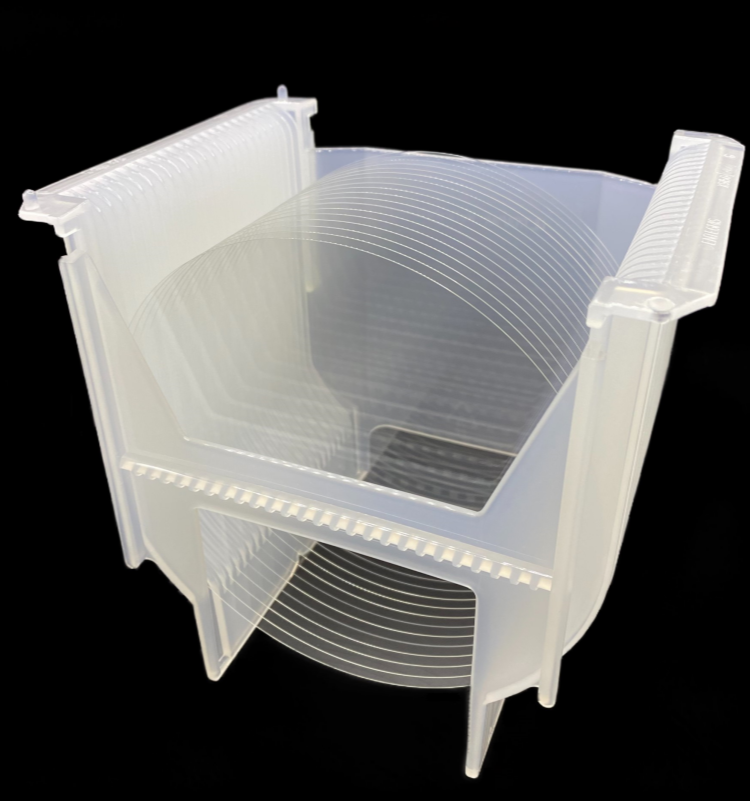
Thermal shock occurs when a material experiences a rapid temperature transition, such as moving from a high-temperature furnace into a cooling zone or exposing a heated substrate to a gas purge. The surface and internal regions do not change temperature at the same speed. This creates thermal gradients and mechanical stress.
Quartz glass, also called fused quartz or fused silica, performs well in these conditions because it has:
However, “high thermal shock resistance” does not mean that a quartz glass substrate is impossible to break. Mechanical damage, sharp corners, surface scratches, contamination, uneven heating, excessive temperature gradients, and poor handling can all create crack initiation sites.
These terms are related but not identical:
A substrate may remain stable during a long, steady bake but fail during a sudden temperature transition. This is why a complete evaluation of the Thermal Shock Resistance of Quartz Glass Substrates in Industrial Use must include both temperature magnitude and heating or cooling rate.
The use of fused silica expanded with the development of high-temperature laboratory equipment, optical systems, lamp technology, and semiconductor manufacturing. As industrial processes became cleaner and more precise, engineers needed substrates with low contamination, low expansion, and reliable performance under thermal cycling.
Today, the Quartz Glass Substrate is used in equipment and assemblies such as:
In these applications, failure is rarely limited to the price of one substrate. A cracked component can contaminate a process chamber, interrupt a production line, damage adjacent parts, or force a complete batch to be rejected. Therefore, thermal shock resistance is a process-reliability issue, not simply a material-property specification.
A reliable evaluation begins with the actual process profile. Engineers should record the starting temperature, target temperature, ramp rate, cooling rate, atmosphere, holding time, fixture design, and number of cycles. The same Quartz Glass Substrate can perform differently in air, nitrogen, vacuum, hydrogen-containing atmospheres, or chemically active process gases.
Testing should be agreed with the customer because no single test perfectly represents every industrial process. Depending on the product category, laboratories may reference or adapt:
| Standard or method | Typical relevance | Important note |
|---|---|---|
| ASTM C149 | Thermal shock resistance evaluation for glass materials | Test parameters should be matched to the substrate geometry and application. |
| ASTM C1525 | Thermal shock testing principles for advanced ceramics | Useful as a reference framework when the substrate is part of a technical ceramic assembly. |
| ISO 14644 series | Cleanroom and contamination-control requirements | Relevant when quartz substrates are used in semiconductor or precision optical manufacturing. |
| Customer-specific qualification | Production temperature-cycle simulation | Often the most representative method because it reproduces the actual equipment profile. |
For trustworthy results, the test report should specify sample dimensions, edge preparation, heating medium, cooling medium, temperature setpoints, ramp rates, cycle count, inspection method, and acceptance criteria. A simple pass/fail statement without these details is difficult to compare or audit.
Low expansion reduces dimensional change, but it does not eliminate stress. A substrate with a chipped edge or a poorly designed corner may still fracture during a moderate thermal transition. Edge finishing, polishing, radius design, and correct handling remain essential.
Maximum operating temperature and thermal shock resistance are different specifications. A part may tolerate a high steady-state temperature but fail when transferred rapidly between hot and cold zones. Qualification must reproduce the real thermal cycle.
Thicker is not automatically safer. A thick substrate can develop a larger temperature difference between its surface and center during rapid heating. Geometry, heat-transfer conditions, support design, and surface quality must be considered together.
Visual inspection can identify chips, cracks, bubbles, stains, and surface defects, but it cannot fully predict performance under thermal cycling. Depending on risk level, inspection should be combined with dimensional measurement, cleanliness verification, microscopy, and thermal-cycle testing.
Different grades may vary in purity, hydroxyl content, optical transmission, bubble class, surface finish, and resistance to process chemicals. Substituting a material without reviewing the process environment can cause contamination, shortened service life, or unexpected optical and electrical behavior.
CQT’s engineering approach should begin with the customer’s process rather than with a generic catalog dimension. The technical review normally considers:
For high-reliability programs, CQT can establish an inspection plan that may include dimensional inspection to 0.01 mm, 100% visual inspection for critical defects, sampling-based microscopic examination, batch traceability, and documented thermal-cycle qualification. The exact capability and acceptance level should be confirmed against the drawing and purchase specification.
A quartz carrier in a diffusion furnace may be heated to a high process temperature and then cooled during unloading. If cooling is too rapid, a thermal gradient can form between the exposed surface and the interior. Repeated cycles can enlarge small edge defects into visible cracks.
A better solution combines high-purity fused silica, rounded or properly finished edges, adequate clearance in the fixture, controlled gas flow, and a qualification test that reproduces the furnace cycle. In this case, the value of the Thermal Shock Resistance of Quartz Glass Substrates in Industrial Use is measured by fewer carrier replacements and lower contamination risk.
Quartz windows and substrates in ultraviolet systems must maintain optical transmission while experiencing local heating from lamps or radiation sources. Uneven thermal loading can cause distortion or cracking, especially around mounting points.
Engineers should evaluate thermal gradients, optical absorption, mounting stress, surface quality, and cleaning chemistry. A low-expansion Quartz Glass Substrate with an appropriate grade and edge design can help maintain alignment and optical performance.
In RF frequency-control equipment, the substrate may be exposed to temperature changes during assembly, environmental testing, or field operation. Dimensional stability is important because mechanical movement can affect resonance, alignment, or electrical characteristics.
Here, thermal shock qualification should be combined with dimensional inspection and electrical performance verification. The goal is not only to prevent fracture but also to maintain frequency stability and repeatable assembly performance.
A structured process helps users avoid both over-testing and under-testing. The following workflow is suitable for many industrial Quartz Glass Substrate projects:
Investing in a properly qualified substrate can produce measurable operational benefits:
For procurement teams, the lowest unit price is not always the lowest total cost. A substrate that fails after a small number of thermal cycles may cost far more than a properly engineered part with documented inspection and qualification data.
In many high-temperature industrial applications, yes. Fused quartz has a much lower coefficient of thermal expansion than common soda-lime glass and generally provides better resistance to rapid temperature changes. The final result still depends on geometry, surface condition, mounting, and process parameters.
There is no universal number. Service life depends on the temperature range, ramp rate, atmosphere, stress concentration, surface damage, and cleaning procedure. A representative qualification program is more reliable than a generic cycle-life claim.
Testing and reporting should be agreed according to the drawing, application, and applicable standard. CQT customers should request the test method, sample details, cycle profile, inspection criteria, and traceability information before approval.
Include material grade, purity, dimensions, tolerance, flatness, parallelism, surface finish, edge treatment, allowable defects, cleanliness level, packaging, inspection standard, and thermal-cycle requirements. Referencing ASTM or customer-specific procedures makes the specification clearer and easier to audit.
The Thermal Shock Resistance of Quartz Glass Substrates in Industrial Use is the ability to tolerate rapid temperature changes without cracking or losing required performance. Fused quartz is valuable because of its low thermal expansion, high-temperature capability, chemical resistance, and dimensional stability.
Nevertheless, material selection alone is not enough. Reliable performance requires the correct geometry, edge finishing, mounting design, process profile, inspection method, and qualification standard. By working with CQT on a documented engineering and quality plan, manufacturers can improve equipment reliability, reduce thermal-cycle failures, and protect production yield.
To evaluate a Quartz Glass Substrate for your application, prepare the thermal profile, drawing, atmosphere, fixture details, and acceptance criteria. CQT can then help determine an appropriate material grade, manufacturing route, inspection plan, and validation method for your industrial process.


Copyright © Hangzhou Freqcontrol
Electronic Technology Ltd.
All Rights Reserved | Sitemap |
Powered by 







 中文


