Modern semiconductor, optical, RF, and laboratory systems need a substrate that can handle heat, chemicals, and tight dimensional limits. A Quartz Glass Substrate for semiconductor packaging uses high-purity fused silica to provide electrical insulation, optical clarity, and low thermal expansion. These features help reduce warping, contamination, and signal loss during demanding production steps. For buyers comparing materials, understanding purity, thickness, surface finish, and thermal behavior is the first step toward choosing a reliable quartz glass substrate.
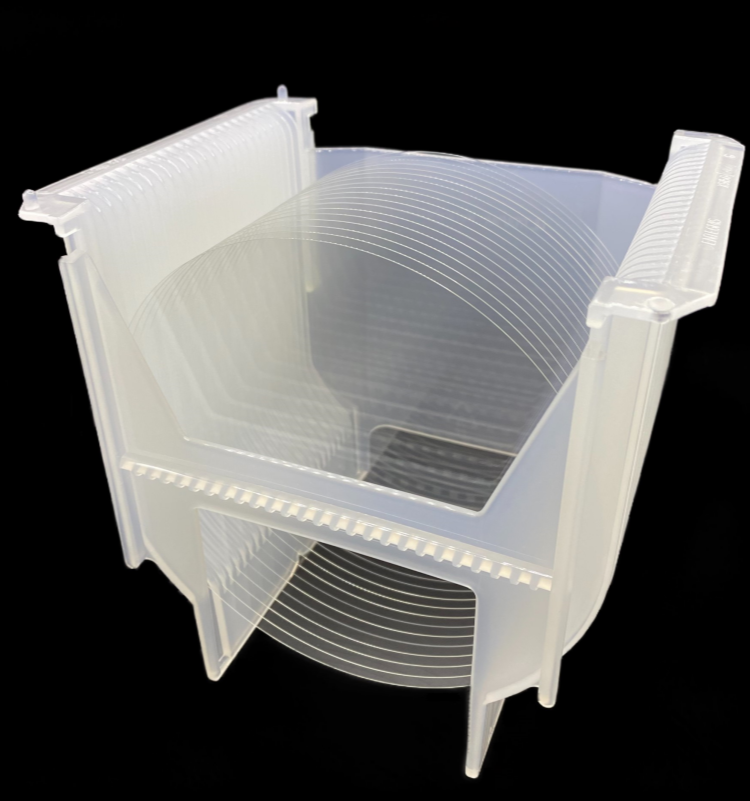
A quartz glass substrate is a flat plate, wafer, panel, or custom-shaped base made from high-purity silica glass. Its main chemical component is silicon dioxide, written as SiO2. Unlike ordinary glass, quartz glass is produced with controlled raw materials and processing methods that reduce metallic impurities, bubbles, inclusions, and surface defects.
In the industry, several related terms may appear:
Quartz glass is not the same as crystalline quartz. Crystalline quartz has an ordered atomic structure and piezoelectric behavior, while fused silica is amorphous. This difference gives fused silica strong resistance to thermal shock and avoids the directional properties found in many crystalline materials.
The value of a quartz glass substrate comes from its combination of mechanical stability, thermal performance, chemical resistance, and electrical insulation. No single property solves every production problem, so the material must be matched to the process temperature, load, chemical exposure, and surface requirements.
Fused silica has a very low coefficient of thermal expansion. Heraeus lists a typical value of about 0.55 × 10⁻⁶ K-1 for quartz glass near room temperature, although the exact value depends on grade and temperature range. In simple terms, a 100 mm part would expand by roughly 0.0055 mm when its temperature rises by 100°C under this approximate value.
Low expansion helps reduce:
This does not mean quartz glass cannot crack. Sudden temperature differences, edge damage, uneven heating, and mechanical impact can still cause failure. A sound equipment design must control ramp rates and avoid sharp corners where possible.
Quartz glass can operate in high-temperature processes that would soften or deform many common polymers and glasses. Heraeus reports a softening point of approximately 1,680°C for certain fused silica grades. The practical working temperature is lower and depends on load, time, atmosphere, part geometry, and surface condition.
In semiconductor furnaces, quartz components may support processes around 800°C to 1,200°C. The exact operating limit must come from the material supplier and equipment manufacturer. Repeated thermal cycles can also cause devitrification, which is the formation of crystalline silica on the surface. Contamination, alkali metals, and unsuitable process gases can increase this risk.
Quartz glass resists many acids and process chemicals, including hydrochloric acid and nitric acid under suitable conditions. However, it is not resistant to every chemical. Hydrofluoric acid and hot concentrated alkaline solutions can attack silica. This point is critical for wet benches and laboratory equipment.
Before placing a quartz substrate in a chemical process, confirm:
High-purity fused silica is an electrical insulator with low dielectric loss compared with many conventional materials. This makes it useful for RF components, sensor structures, isolation layers, and laboratory test fixtures. Electrical performance still depends on frequency, temperature, moisture, electrode design, and surface cleanliness.
Fused silica offers useful transmission from the ultraviolet through the visible and near-infrared ranges. The exact transmission curve depends on the grade, hydroxyl content, thickness, polishing quality, and wavelength. Synthetic fused silica is often selected for demanding ultraviolet optics because it can provide lower absorption and fewer impurities than standard glass grades.
Quartz substrates and quartz carriers are widely used in diffusion, oxidation, annealing, deposition, and cleaning processes. They can support wafers inside high-temperature furnaces while limiting particle generation and chemical contamination.
Typical quartz components include:
For semiconductor use, buyers should pay close attention to metallic impurity levels, particle performance, bubble content, surface roughness, and cleaning procedures. A visually clear plate may still fail a high-purity process if its contamination level is not controlled.
A quartz glass substrate can act as a stable base for sputtering, evaporation, chemical vapor deposition, and other thin-film processes. Its low expansion helps limit film stress caused by heating. It is used in selected display, photonics, sensor, and research applications.
The substrate must be matched with the deposited material. Differences in thermal expansion between quartz and a film can create cracks, peeling, or residual stress. Film thickness, deposition temperature, cooling rate, and surface treatment should be evaluated together.
Optical-grade quartz glass is used for windows, lenses, prisms, light guides, ultraviolet components, and laser systems. It is valuable where high transmission, low thermal expansion, and resistance to ultraviolet radiation are important.
Optical buyers often specify:
Quartz glass can provide electrical isolation and dimensional stability in RF and microwave assemblies. It may also be used as a base for acoustic, gas, temperature, and chemical sensors. When the substrate is part of a high-frequency circuit, dielectric constant, loss tangent, conductor pattern, and package design must be tested as a complete system.
Quartz dishes, plates, tubes, cuvettes, and sample holders are common in laboratories. They are selected for chemical resistance, thermal stability, and low background interference in optical measurements. In analytical work, the cleaning method is as important as the material because residues can affect test results.
Quartz components are used in selected solar-cell, battery, fuel-cell, and materials-research processes. High-temperature furnaces and plasma systems often require quartz windows, liners, or holders. The correct grade depends on process gases, plasma exposure, temperature, and expected service life.
Low thermal expansion helps the substrate maintain its shape during temperature changes. This is especially useful when a part must remain aligned with a mask, electrode, wafer, or optical path.
High-purity quartz can reduce unwanted metallic and organic contamination compared with poorly selected materials. The final result depends on raw material quality, machining, washing, packaging, and handling. Purity should therefore be confirmed with a supplier specification or certificate of analysis.
Quartz glass can tolerate many thermal and chemical processes that damage plastics or ordinary soda-lime glass. Its service life is not unlimited, but correct grade selection and controlled cleaning can reduce replacement frequency.
The same substrate may support optical inspection while electrically isolating a device or fixture. This combination is useful in sensors, photonics, laboratory instruments, and advanced manufacturing equipment.
Record the highest and lowest temperature, heating rate, cooling rate, atmosphere, pressure, chemical exposure, and cycle count. A substrate for a 200°C laboratory process does not face the same requirements as one used in a 1,000°C furnace.
Ask the supplier for the SiO2 content and impurity limits. For semiconductor or optical work, request data for aluminum, iron, sodium, potassium, calcium, and other relevant elements. Do not choose a grade based only on the label “high purity.”
Specify length, width, diameter, thickness, thickness tolerance, flatness, parallelism, edge geometry, and hole locations. Tight tolerances may increase cost and lead time, so define only what the equipment truly needs.
Surface requirements may include roughness, polish level, scratch-dig quality, chamfer size, and edge treatment. A polished surface can support optical inspection and reduce particle retention, while a frosted or textured surface may be suitable for other uses.
Ask how the part should be heated, cooled, cleaned, and handled. A thick plate with a sharp edge is more vulnerable to thermal gradients than a thin plate with rounded edges. The supplier may recommend a ramp rate or preheating method.
For cleanroom use, request a defined cleaning process, particle-control method, and packaging standard. Packaging should prevent scratches, dust, moisture, and contact with materials that could leave residues.
Before placing a large order, test a sample under real process conditions. Check warpage, surface change, contamination, optical transmission, electrical behavior, and breakage after repeated cycles.
Although the exact route differs by supplier, production commonly includes the following steps:
Machining quality matters because small edge chips can become crack-starting points during thermal cycling. For high-temperature use, ask whether the product has been inspected for devitrification risk and whether the supplier controls metal-tool contamination.
| Problem | Likely cause | Practical action |
|---|---|---|
| Cracking during heating | Uneven heating, fast cooling, edge damage, or excessive thickness | Control ramp rates, inspect edges, and improve furnace temperature uniformity |
| Surface whitening | Devitrification after repeated high-temperature exposure | Review temperature, time, atmosphere, and contamination sources |
| Particles in a clean process | Poor cleaning, worn surfaces, handling damage, or packaging dust | Use a controlled cleaning and packaging process and inspect before use |
| Film peeling or cracking | Thermal expansion mismatch or poor surface preparation | Measure film stress and adjust deposition or surface treatment |
| Unexpected chemical damage | Exposure to hydrofluoric acid or hot alkaline chemicals | Check chemical compatibility before production and test at operating conditions |
Material data should be checked against the exact grade supplied. Useful technical references include:
Supplier data sheets are not interchangeable. A quoted coefficient of thermal expansion, transmission value, or purity level should include the test temperature, measurement method, grade, and sample condition.
| Material | Main strength | Important limitation |
|---|---|---|
| Quartz glass | Low thermal expansion, high temperature resistance, chemical resistance, optical clarity | Can be brittle; vulnerable to hydrofluoric acid and strong hot alkalis |
| Alumina ceramic | High hardness, electrical insulation, and thermal stability | Usually less optically transparent and may have different thermal behavior |
| Borosilicate glass | Lower cost and good thermal-shock performance for many laboratory uses | Generally less suitable for the highest purity and temperature requirements |
| Silicon wafer | Excellent semiconductor processing compatibility | Conductive behavior and process limitations may not suit insulation or optical uses |
| Polymer substrate | Light weight and easy processing | Lower temperature resistance and possible outgassing or chemical attack |
CQT can support the early design and sourcing stage by helping users organize the technical requirements for a quartz glass substrate. A useful inquiry should include the application, drawing, dimensions, temperature range, chemical exposure, surface finish, purity target, quantity, and inspection requirements.
When contacting CQT, include photographs or drawings of the current part if available. Also explain the failure you are trying to solve, such as cracking after thermal cycling, particles after cleaning, film adhesion problems, or dimensional drift. This information allows the supplier to recommend a more suitable grade and manufacturing route instead of quoting a generic quartz plate.
In many commercial contexts, the terms are used in a similar way because both describe amorphous silicon dioxide glass. However, the raw material, manufacturing method, hydroxyl content, impurity level, and optical grade can differ. Always check the supplier’s technical data.
Many quartz components are used above 1,000°C, but the safe temperature depends on load, exposure time, atmosphere, geometry, and surface condition. The softening point is not the same as a recommended continuous operating temperature.
No. Hydrofluoric acid attacks silica and can etch or damage quartz glass. A compatible cleaning method must be selected for the required surface condition and process chemistry.
The white or cloudy appearance may result from devitrification, surface deposits, contamination, or micro-damage. Check the furnace atmosphere, temperature history, cleaning chemicals, and handling process before replacing the part.
Use clean gloves, avoid touching polished surfaces, support the part evenly, and protect edges from impact. Store substrates in clean packaging and inspect them for chips, cracks, particles, and stains before installation.
Provide the material grade, purity, dimensions, tolerances, surface roughness, flatness, edge treatment, holes or slots, operating temperature, chemical exposure, quantity, and packaging requirements. A technical drawing is the most effective starting point.
Start by writing a short process specification rather than choosing a substrate by appearance or price alone. Record the temperature profile, chemicals, loading conditions, cleanliness level, optical or electrical needs, and expected service cycles. Then request a material certificate, dimensional inspection report, and sample test from the supplier.
For teams comparing a high-purity fused silica quartz substrate, the most useful next step is to review a product guide, send the part drawing to CQT, and test the proposed grade under real production conditions. This approach can reduce avoidable cracking, contamination, and dimensional problems before full-scale purchasing.


Copyright © Hangzhou Freqcontrol
Electronic Technology Ltd.
All Rights Reserved | Sitemap |
Powered by 







 中文


