Modern semiconductor, display, photonics, and laboratory equipment depends on materials that remain stable under heat, chemicals, and precise optical processes. A Quartz Glass Substrate offers this combination through high-purity fused silica, low thermal expansion, and strong ultraviolet transmission. For companies seeking a high-purity quartz glass substrate for semiconductor manufacturing, the main challenge is not simply finding a clear glass plate. The substrate must match the required purity, thickness tolerance, surface finish, size, and process temperature.
This guide explains what quartz glass substrates are, where engineers use them, why prices vary, and how to select a reliable product. It also shows how a careful specification review can reduce breakage, contamination, rework, and unexpected production costs.
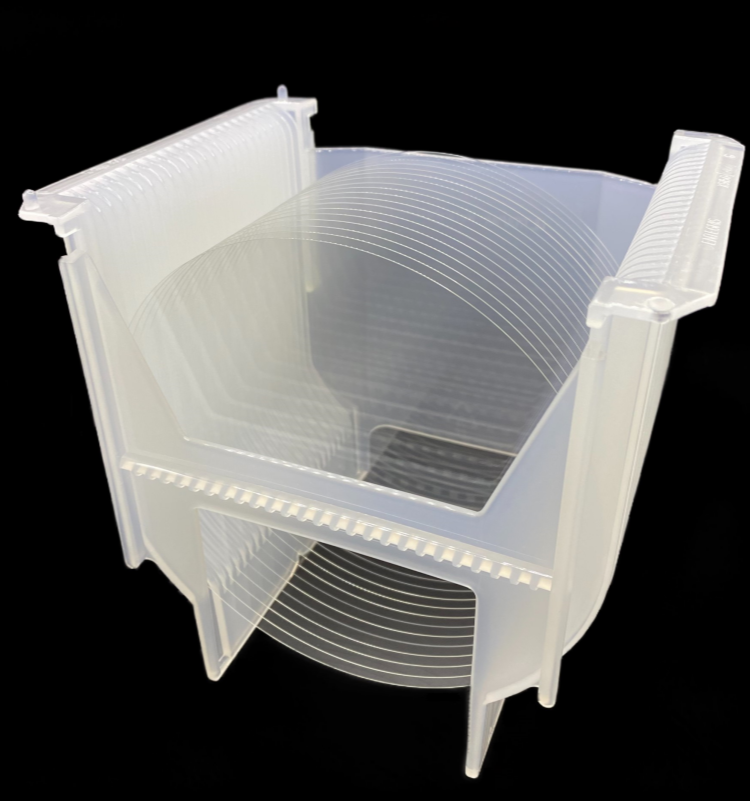
A quartz glass substrate is a flat plate, wafer, disc, or custom-shaped component made from high-purity amorphous silicon dioxide, commonly written as SiO2. Unlike ordinary window glass, fused quartz does not contain large amounts of sodium, calcium, or other additives. This composition gives it better performance in high-temperature, ultraviolet, and chemically demanding environments.
The word “substrate” means the base material that supports another process or layer. Depending on the industry, a quartz glass substrate may support:
Many manufacturing processes expose a substrate to temperatures above 500°C, corrosive gases, plasma, ultraviolet light, or repeated heating and cooling. A material that expands unevenly can create alignment errors, coating defects, or wafer stress.
Fused silica is useful because its thermal expansion is much lower than that of common soda-lime glass. SCHOTT lists fused silica and quartz glass products with low thermal expansion and strong resistance to thermal shock in its technical material information. Corning also describes fused silica grades for semiconductor, optical, and high-temperature applications.
Quartz glass is not automatically the best choice for every project. It may be more expensive than borosilicate glass, silicon, or ordinary glass. It can also be brittle, and a polished surface can be damaged by incorrect handling. The correct decision depends on the complete process window rather than on material price alone.
Semiconductor tools use quartz components in wafer processing, diffusion, oxidation, etching, cleaning, and deposition. Quartz boats, rings, tubes, windows, plates, and carriers must resist high temperatures and process chemicals while introducing minimal contamination.
For photolithography and inspection, optical transmission and dimensional stability are also important. A substrate with low metal contamination and controlled surface roughness can help protect process yield. The exact limits should be confirmed against the equipment maker’s specification because acceptable contamination levels differ between process steps.
Display manufacturing uses large-area glass substrates and photomasks. Quartz or fused silica may be selected for mask-related components because it provides high optical quality and good stability during exposure and alignment. At larger sizes, flatness, thickness uniformity, edge quality, and handling become major design concerns.
Fused silica transmits light across a wide wavelength range, including ultraviolet bands where many ordinary glasses absorb more strongly. It is used for optical windows, beam splitters, lamp envelopes, laser components, and UV exposure equipment.
Optical performance depends on more than transparency. Engineers may also specify refractive index uniformity, birefringence, wedge, striae, coating adhesion, and laser damage threshold.
Microelectromechanical systems often require a stable base for bonding, etching, and thin-film deposition. Quartz glass can provide electrical insulation, chemical resistance, and a smooth surface for microfabrication. It is used in selected pressure sensors, resonators, microfluidic devices, and laboratory-on-chip systems.
Quartz components are found in high-temperature furnaces, deposition chambers, and inspection systems used in solar-cell production. Low contamination and resistance to thermal cycling are important when the component is repeatedly exposed to heat and reactive gases.
Quartz glass substrates and plates are used in spectroscopy, UV testing, sample preparation, heating stages, and chemical analysis. The material is useful when a laboratory needs optical clarity, low fluorescence, and resistance to many acids and solvents.
Fused silica typically has a thermal expansion coefficient near 0.55 × 10⁻⁶/K. For a 100 mm substrate exposed to a 500 K temperature increase, the theoretical linear expansion would be approximately:
100 mm × 0.55 × 10−6/K × 500 K = 0.0275 mm
That is about 27.5 micrometers before considering the exact grade, temperature range, mounting method, and process conditions. This low expansion helps reduce dimensional movement during thermal processing.
Quartz glass can operate in high-temperature environments that would deform or soften many common glasses. The safe operating temperature depends on geometry, heating rate, cooling rate, load, and surface condition. A thick plate with sharp corners may fail under thermal shock even when the material itself has strong heat resistance.
High-purity fused silica is widely used for UV optics because it can transmit wavelengths that ordinary soda-lime glass blocks. Transmission depends on grade, thickness, surface reflection, impurities, and wavelength. A supplier should provide a spectral transmission curve when UV performance is part of the requirement.
Quartz glass resists many acids and process chemicals. However, it is not immune to every chemical. Hydrofluoric acid and hot concentrated alkaline solutions can attack or etch silica. The process chemical list should be reviewed before approval.
Quartz glass is an electrical insulator with low dielectric loss at many frequencies. This makes it suitable for selected RF, sensor, plasma, and high-voltage applications. The final electrical behavior can change with temperature, frequency, thickness, and surface contamination.
High-purity grades can reduce the risk of metallic or ionic contamination in sensitive processes. Purity is not determined only by the base material. Cutting tools, polishing compounds, cleaning water, packaging, and warehouse conditions can also affect the final contamination level.
The price of a quartz glass substrate is usually driven by more than its length and width. A small, highly polished optical substrate may cost more than a larger industrial plate because it requires tighter inspection and finishing.
High-purity fused silica costs more than lower-grade material because it requires cleaner production, tighter impurity control, and more detailed inspection. Applications involving semiconductor processing or UV optics may require limits for aluminum, iron, sodium, potassium, lithium, and other trace elements.
Larger substrates require more raw material and create higher risks during cutting, grinding, polishing, washing, and shipping. Thin substrates are also difficult to process because they can warp, chip, or break under mechanical stress.
A standard plate may accept a wider thickness range, while a precision substrate may require a tolerance of only a few micrometers. Flatness, parallelism, total thickness variation, and edge profile can add several manufacturing steps.
Ground, lapped, fine-ground, and polished surfaces have different costs. A polished substrate with a specified Ra value, low haze, and controlled scratch-dig level requires longer processing and more inspection than a rough-cut piece.
Slots, through-holes, chamfers, notches, curved edges, and custom outlines increase programming, tooling, and inspection time. Small holes near an edge can be especially difficult because they increase stress concentration and breakage risk.
Optical substrates may require limits for bubbles, inclusions, striae, birefringence, wedge, refractive index uniformity, and transmission. Each additional optical test adds labor and may increase the rejection rate.
Semiconductor and laboratory customers may require ultrasonic cleaning, megasonic cleaning, particle inspection, vacuum packaging, or cleanroom packing. These steps protect the surface but add controlled handling and documentation costs.
Small orders often have a higher unit price because setup, tooling, inspection, and packaging costs are spread across fewer pieces. Custom thin substrates may also have a lower production yield, which raises the price of accepted units.
Material certificates, dimensional reports, surface inspection records, lot traceability, and chemical analysis improve process control. If a customer needs a complete inspection report for every batch, that requirement should be included in the quotation request.
List the highest temperature, heating rate, cooling rate, process gases, liquids, pressure, UV wavelength, plasma exposure, and expected service life. This information prevents a supplier from recommending a material based only on appearance.
Ask whether the project needs natural quartz, synthetic fused silica, UV-grade fused silica, semiconductor-grade quartz, or another specialized grade. Request a material data sheet that identifies purity, OH content, thermal properties, and optical transmission.
Specify length, width, diameter, thickness, thickness tolerance, flatness, parallelism, corner radius, chamfers, and hole locations. “High precision” is not a measurable requirement until numerical limits are provided.
State whether the surface should be cut, ground, lapped, polished, or coated. Include roughness, scratch-dig, haze, and coating requirements when relevant. A supplier cannot accurately price polishing without these details.
For sensitive processes, request particle limits, cleaning method, packaging class, metallic impurity data, and inspection frequency. Also confirm whether the supplier measures the finished part or only tests the incoming raw material.
A technical drawing should show datums, tolerances, edge treatment, inspection points, and acceptable defects. If the design is new, test a small sample lot before placing a high-volume order.
Include shipping protection, breakage allowance, cleaning, inspection, tooling, rejected pieces, replacement lead time, and production downtime. A lower-priced substrate that causes a 2% process rejection rate may cost more than a higher-priced substrate with stable performance.
Cause: Sharp corners, thin geometry, edge chips, thermal shock, or incorrect packaging.
Solution: Add edge chamfers or radii, inspect edges under magnification, use cushioned separators, and control heating and cooling rates. Operators should use clean gloves and avoid sliding the substrate across hard surfaces.
Cause: Inadequate rinsing, contaminated tools, poor drying, or packaging particles.
Solution: Define the cleaning chemistry, rinse-water quality, drying method, particle limit, and packaging environment. Ask for a cleaning certificate when the component enters a clean process.
Cause: Internal stress, uneven grinding, thin geometry, thermal gradients, or fixture pressure.
Solution: Review the thickness-to-size ratio, use a suitable support fixture, measure flatness at the required temperature, and specify whether flatness is free-state or fixture-mounted.
Cause: Incorrect material grade, surface reflection, contamination, coating loss, or measurement at a different wavelength.
Solution: State the target wavelength and thickness. Request a transmission curve and confirm whether the result includes surface reflections.
Cause: Impurities in the material, residues from polishing, metal contact, or poor storage.
Solution: Require a purity specification, validated cleaning procedure, clean packaging, and lot traceability. Introduce the component through a controlled qualification process.
CQT can be considered when a project needs a structured review of material grade, dimensions, surface finish, cleaning, packaging, and inspection. The most useful supplier is not always the one with the lowest first quotation. It is the one that can translate a process requirement into measurable specifications and maintain those specifications from sample production to repeat orders.
Before contacting CQT, prepare a drawing or a short specification sheet that includes the substrate shape, size, thickness, tolerance, surface finish, temperature, chemicals, optical wavelength, quantity, and inspection requirements. This information helps the supplier provide a more accurate quotation and identify risks before production begins.
No. Ordinary glass usually contains several oxide additives, while quartz glass is mainly silicon dioxide. This difference gives quartz glass lower thermal expansion, better high-temperature stability, and useful UV transmission.
Hydrofluoric acid attacks silicon dioxide and can etch quartz glass. The concentration, temperature, exposure time, and surface condition affect the result. A chemical compatibility review is required before use.
The terms are often used interchangeably in industry. However, suppliers may use “fused silica” for synthetic high-purity material and “quartz glass” for a wider group of transparent silica products. Always check the chemical and optical data sheet.
A small part may require tighter tolerances, complex holes, optical polishing, special cleaning, or 100% inspection. Processing and inspection time can therefore be higher than the raw material cost.
Store them in clean, dry packaging with separators that do not shed particles. Avoid contact between polished surfaces, sudden temperature changes, and metal tools that can scratch or contaminate the glass.
Yes. Suppliers can often produce custom dimensions, holes, slots, chamfers, coatings, surface finishes, and packaging. The achievable result depends on size, thickness, geometry, and tolerance.
Request a quotation using a complete drawing and specification. Include material grade, size, thickness, tolerance, flatness, surface roughness, edge treatment, quantity, cleaning, inspection, packaging, and delivery location. The phrase quartz glass substrate cost per piece has little meaning without these variables.
A Quartz Glass Substrate supports demanding processes because it combines low thermal expansion, high-temperature stability, chemical resistance, electrical insulation, and strong UV performance. Its price is shaped by purity, size, geometry, polishing, tolerances, cleaning, inspection, and production yield. To move forward, prepare a drawing, define the process environment, request material and inspection data, and test a sample lot before full-scale purchasing.
For a practical next step, compare the technical data sheets of qualified suppliers and ask CQT to review your design. A clear specification will help you select the right custom quartz glass substrate supplier, control quality, and obtain a more realistic quotation for your application.


Copyright © Hangzhou Freqcontrol
Electronic Technology Ltd.
All Rights Reserved | Sitemap |
Powered by 







 中文


