Optical Transparency Advantages of Quartz Glass Substrates in UV Applications refers to the ability of a high-purity fused quartz or fused silica substrate to transmit ultraviolet radiation with low absorption, low scattering, and stable optical performance. In practical terms, a Quartz Glass Substrate helps UV lamps, sensors, photolithography systems, analytical instruments, and semiconductor equipment deliver more usable UV energy. For businesses, this can improve process yield, measurement accuracy, equipment lifetime, and total operating cost. CQT supplies precision quartz components and supports application-specific optical, dimensional, and quality requirements.
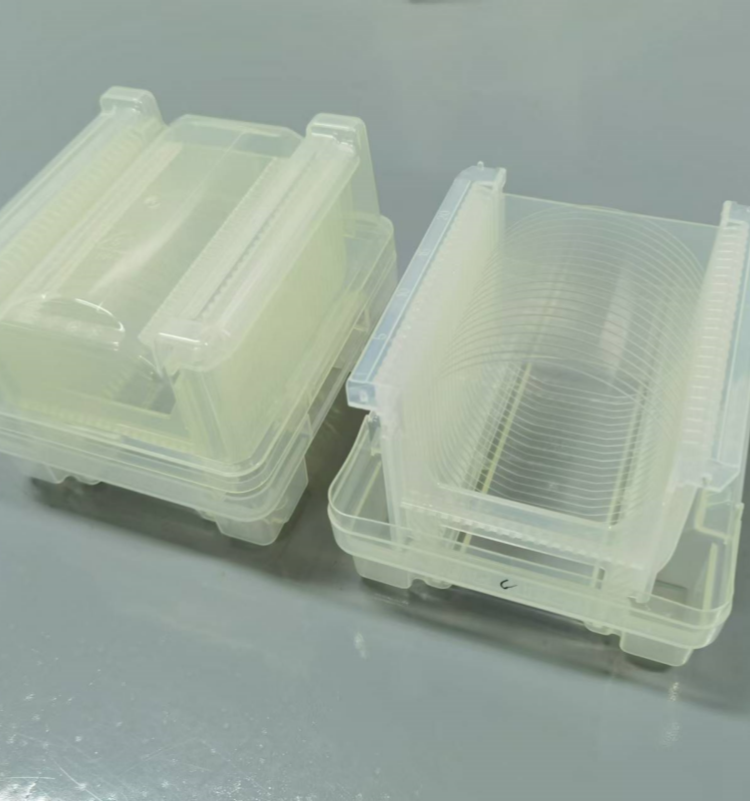
Ultraviolet radiation generally covers wavelengths from approximately 100 to 400 nanometers. Compared with visible light, UV photons are more easily absorbed by impurities, coatings, organic residues, and unsuitable glass compositions. A substrate that appears clear to the human eye may perform poorly in the UV range.
High-purity fused silica is valuable because its molecular structure and low impurity content support high transmittance across important UV bands. Depending on grade, thickness, surface finish, and wavelength, quartz can be engineered for applications ranging from deep ultraviolet, or DUV, to near-ultraviolet, or NUV.
Quartz has been used in scientific and industrial optics for more than a century. Early UV spectroscopy demonstrated that ordinary window glass could block significant portions of ultraviolet radiation, while fused quartz enabled researchers to study shorter wavelengths.
As mercury-vapor lamps, excimer lasers, UV curing systems, and photolithography developed, the demand for low-absorption optical materials increased. Modern semiconductor and precision-manufacturing processes now require tight control of surface quality, flatness, particles, contamination, and spectral transmission.
Today, Quartz Glass Substrate components are found in:
Transmission loss directly affects the energy available at the work surface. When a substrate absorbs less UV radiation, equipment designers may achieve the required dose with lower lamp power or shorter exposure time. This is especially important in UV curing, sterilization, and photochemical processing, where dose uniformity influences product quality.
For optical instruments, higher transmission can also improve signal-to-noise ratio. A detector receives more useful radiation, reducing the need for aggressive electronic amplification or long integration times.
Not all glass is suitable for UV transmission. Standard soda-lime glass may transmit visible light effectively but absorb much of the UV spectrum. Borosilicate glass can offer better thermal performance, yet it may still be unsuitable for deep-UV applications.
UV-grade fused silica is therefore selected when the design requires stable transmission at a specified wavelength, such as 193 nm, 248 nm, 254 nm, 266 nm, 365 nm, or another application-specific point. The correct material must be confirmed through a spectral-transmission curve rather than a visual inspection.
UV lamps and plasma processes generate heat. Fused quartz offers a very low coefficient of thermal expansion, which helps reduce warpage, focus drift, and mechanical stress during thermal cycling. This stability is valuable in mask assemblies, optical windows, wafer carriers, and precision inspection systems.
In semiconductor, pharmaceutical, and laboratory environments, outgassing and ionic contamination can damage process control. Properly cleaned and handled quartz generally presents a lower contamination risk than many organic materials. CQT can define cleaning, packaging, and inspection requirements according to the customer’s process environment.
UV exposure can cause yellowing, embrittlement, or degradation in polymers. High-purity quartz is more resistant to many of these failure modes. However, service life still depends on wavelength, irradiance, temperature, atmosphere, surface contamination, and material grade. A qualified engineering review is essential before making a lifetime claim.
Optical transparency is only one part of a reliable substrate. A component may have acceptable transmission but fail because of poor flatness, edge chips, scratches, particles, or incorrect mounting dimensions. CQT’s quality approach should therefore address the complete supply chain, from material selection to final inspection.
| Quality characteristic | Why it matters in UV applications | Typical verification approach |
|---|---|---|
| Spectral transmittance | Confirms that the substrate passes the required UV wavelength | UV-Vis spectrophotometry; laboratory calibration aligned with ISO/IEC 17025 practices |
| Surface quality | Reduces scattering, absorption sites, and beam distortion | Optical scratch-dig inspection and microscopy |
| Haze and clarity | Helps protect imaging and detector signal quality | Applicable ASTM D1003-style haze measurement where appropriate to the geometry |
| Flatness and parallelism | Supports focus accuracy and uniform exposure | Interferometric or precision dimensional measurement |
| Thermal cycling | Identifies stress, cracking, and dimensional drift risks | Application-specific thermal-cycle procedures and documented acceptance criteria |
| Instrument performance | Ensures reliable spectral readings | Measurement practices referencing ASTM E275 and calibrated equipment |
Testing standards must be matched to the product configuration. ASTM, DIN, ISO, and customer-specific specifications do not automatically apply in the same way to every quartz geometry. A competent supplier should state the test method, wavelength range, sample thickness, instrument configuration, and acceptance limit.
Quartz performance varies with material purity, hydroxyl content, manufacturing method, thickness, surface condition, and wavelength. A substrate optimized for 365 nm may not provide the same performance at 193 nm. Always request a transmission curve or a defined minimum-transmission specification.
The human eye cannot verify ultraviolet transmission. A plate may look perfectly clear while blocking critical UV energy. Spectrophotometric measurement is required for an objective evaluation.
Greater thickness can improve mechanical strength, but it may also increase absorption, weight, cost, and thermal gradients. Thickness should be selected through optical, mechanical, and thermal calculations.
Quartz is highly durable, but prolonged high-energy exposure can produce solarization or transmission changes in some grades and environments. Contamination, hydrogen content, radiation dose, and lamp spectrum all influence performance. UV-grade material and process-specific qualification remain important.
A cheaper substrate may initially reduce purchase price but increase lamp energy consumption, replacement frequency, calibration downtime, or rejected product. Total cost of ownership should include optical throughput, cleaning, maintenance, yield, and service life.
Photolithography systems require precise wavelength control, low scatter, clean surfaces, and stable geometry. A suitable Quartz Glass Substrate can support accurate exposure and reduce process variation. In this environment, particles, haze, wedge, and surface defects may be as important as nominal transmission.
In electronics, optics, and medical-device assembly, insufficient UV dose can cause incomplete curing and weak bonding. A low-absorption quartz window helps deliver more uniform radiation to the adhesive layer. This can support shorter cycle times and more consistent cure depth.
Many germicidal systems use approximately 254 nm radiation from low-pressure mercury lamps, while newer systems may use other UV-C wavelengths. The sleeve or window must transmit the target wavelength while resisting temperature, water chemistry, fouling, and cleaning procedures.
UV spectroscopy depends on accurate light transmission through sample cells, windows, and optical paths. Quartz minimizes unwanted absorption compared with ordinary glass, improving baseline stability and measurement reliability in UV-Vis analysis.
Consider an electronics manufacturer using a glass window above a UV curing station. The system visually appeared bright, but cure time increased and adhesive strength varied between batches. An engineering review identified that the original material had insufficient transmission at the operating wavelength and had developed surface contamination.
The improvement program included:
The result was a more stable UV dose at the adhesive surface, reduced variation between assemblies, and a clearer maintenance schedule. The exact improvement depends on the lamp, wavelength, geometry, and initial window condition, so performance should be verified through before-and-after measurements.
Before requesting a quotation from CQT, prepare the following information:
A complete drawing and application profile allows CQT to recommend the appropriate quartz grade and inspection plan instead of quoting a generic transparent plate.
CQT combines optical-material knowledge with precision manufacturing and quality control. For demanding projects, customers can request:
These capabilities help reduce the risks associated with incorrect material selection, uncontrolled surface defects, and incomplete UV performance specifications.
Optical Transparency Advantages of Quartz Glass Substrates in UV Applications include low UV absorption, strong thermal stability, low scattering, chemical resistance, and reliable performance in precision equipment. The best result comes from matching quartz purity, thickness, surface finish, geometry, cleaning process, and testing method to the actual UV environment.
For semiconductor tools, UV curing stations, disinfection equipment, and analytical instruments, a properly specified Quartz Glass Substrate can improve throughput, repeatability, and long-term operating value. Contact CQT with your wavelength, drawing, exposure conditions, and inspection requirements to evaluate a reliable UV quartz solution.


Copyright © Hangzhou Freqcontrol
Electronic Technology Ltd.
All Rights Reserved | Sitemap |
Powered by 







 中文


